Latest Post
Showing posts with label Agriculture. Show all posts
Showing posts with label Agriculture. Show all posts
Aid to agriculture increases by 130% in China and by 40% in the US
Written By Unknown on Tuesday, 25 December 2012 | 03:58

Global support to agriculture per capita in the period 2005-2010 has increased by 130% in China, by 60% in Brazil and by 40% in the United States, while in the European Union it has stayed in the same level since 2005, according to the indicator "Global Support to Agricultural Production (SGPA)" published by the Movement for a World Agricultural Organization, MOMAGRI.
According to the indicator that measures support to agriculture in the planet's four largest agricultural producers (Brazil, China, United States and European Union) in 2010, the first place in absolute value is for the US with 163,000 million dollars; in second place is China with 154,000 million dollars; in third place is the EU with 101,000 million dollars and Brazil is fourth with 38,000 million dollars.
In terms of the percentage of the production's value, the US takes the first place with aid representing 48% of the total value, followed by the EU and Brazil with 24% and finally China with 20%.
According to the report, it appears that Brazil and the US show similar support policies to promote competitiveness and stimulate domestic demand. This way, growers from those countries benefit from regulation tools such as:
1. For Brazil: direct intervention in the market, storage planning and funding for the development of biofuels (42% of the Brazilian AGPA).
2. For the US: countercyclical aid mechanisms carried out by insurers and a large plan for domestic food aid.
Regarding China, the report states that the government enforces policies of intervention and insurance of the agricultural production, especially in the shape of a minimum guaranteed price (258 US$/t for wheat, 291 US$/t for rice in 2010), direct income support, social support programs and tax cuts.
Contrastingly, "the EU is the only one basing its agricultural policy on aid decoupled from production, accompanied by greening criteria," according to MOMAGRI in their statement.
According to MOMAGRI:
- "Despite claims about the maintenance of the CAP budget, results show that, since 2005, Europe has taken a different direction to that of other large world producers, which are making large investments to ensure food security for their populations."
- "The worrying decrease in aid entails that the EU may fall behind; situation which would only get worse if the project for the reform of the CAP goes ahead."
- "If the EU persists in its plan to reform the CAP, falling behind would lead to very severe consequences for European agriculture and the agri-food industry." MOMAGRI does not call for an increase in the CAP's budget, but for the adoption of price regulation mechanisms and, consequently, of the income.
It is the first time that the institution compares the support to agriculture in the world's largest agricultural producers. To date, MOMAGRI had only published comparisons between the EU and the US.
Source: Fepex
Agriculture: 1 million farmers to get tips by phone
Written By Unknown on Monday, 24 December 2012 | 01:18

Farmers would have to provide their CNIC numbers, mobile numbers and details related to their agriculture land and crop for registration, says official. IMAGE: CREATIVE COMMON
-----------------------------------------------------------------------------------------------------------------
FAISALABAD:
The provincial government aims to teach farmers how to use modern production methods by sending them information on their mobile phones.Agriculture Department officials said that by March the government planned to register one million farmers in the programme. The farmers will be trained to use modern technology to increase production, they said. Moreover, farmers will also be able to ask for solutions to specific problems by sending questions via their mobile phones.
They said that farmers would have to provide their CNIC numbers, mobile numbers and details related to their agriculture land and crop for registration. The details will be sent to a communication technology centre set up at the office of the agriculture director general. The centre will communicate with the farmers.
The Agriculture Department (Faisalabad extension) has been given a target of registering 20,000 farmers for the programme. A registration cell has been set up under the supervision of District Officer Chaudhry Abdul Hameed.
The DO said that the department hoped the programme would improve the farmers’ knowledge of crops and production.
Published in The Express Tribune, December 18th, 2012.
Experts link kinnow industry growth with removal of middlemen
Written By Unknown on Saturday, 22 December 2012 | 23:37
 Horticulture experts have linked growth of the kinnow industry to the removal of middleman saying that exports of the citrus fruit could be enhanced manifold provided the farmers are provided direct benefit.
At present Pakistan is among the top 10 citrus growing countries in the world and the world export market for horticulture products is about $80 billion, in which Pakistan’s share is not up to mark.
The kinnow exports reached to $100 million in the fiscal year 2010-11,” Chief Executive Officer Harvest Tradings Ahmad Jawad said adding that the exports could be enhanced by strengthening input from farmers.
“The exports can be increased further if all the stake holders remove the role of middleman and strengthen the farmer input who is the real stakeholder of this emerging industry,” Jawad told APP.
Giving details about the citrus exports, Ahmad Jawad said about 200,000 metric tones of kinnow were exported during 2005-06, showing more than a 100 percent increment over the previous year’s exports.
In 2008-09, the kinnow exports were recorded at 177 million kilograms that climbed to 361 million kgs in 2009-10 earning $45.5 million in 2008-09 and $97.8 million in 2009-10.

The exports reached to $100 million in 2010-11, Jawad added.
Kinnow is known as a special variety of citrus fruit and due to unique climatic conditions it is grown in Pakistan, he said adding it has tremendous potential of export to many countries.
The CEO Harvest Tradings said so far Kinnow has already been introduced in more than 25 countries of the world adding its exports can further be increased by manifold if modern marketing techniques are applied.
The CEO Harvest Tradings said so far Kinnow has already been introduced in more than 25 countries of the world adding its exports can further be increased by manifold if modern marketing techniques are applied.
The fruit is among the main exportable horticulture commodities from Pakistan.
Annual production of citrus on an average is estimated about 2 million-ton, of which 90 percent are kinnow, and export also reached to 360,625 tonnes.
Pakistan exports to Gulf States, Saudi Arabia, Philippines, Sri Lanka, Afghanistan and CIS that are been supposed as traditional markets from many years.
Pakistan exports to Gulf States, Saudi Arabia, Philippines, Sri Lanka, Afghanistan and CIS that are been supposed as traditional markets from many years.
East Europe, Iran, Indonesia and China are emerging markets, he said adding the export to Russian Federation reached 31,000 tonnes, Ukraine 5,000 tonnes and Iran 22,000 tonnes.
The World Trade Organisation (WTO) requirements of exports urge for strict compliance with international quality and health safety standards.
The World Trade Organisation (WTO) requirements of exports urge for strict compliance with international quality and health safety standards.
WTO also required best agricultural practices and dedicated production for specific markets both in terms of timely availability in particular tastes, size and colour.
“Therefore, the producers and processors need to upgrade their capacities and facilities to produce fruits of international standard, which is essential,” Jawad added.
He said that the tax relief and other support measures announced by the government over the past years in support of the horticulture crop production and agro industry development would also help to improve the competitiveness of the product and would fetch better prices but needs to continue.
He said that the tax relief and other support measures announced by the government over the past years in support of the horticulture crop production and agro industry development would also help to improve the competitiveness of the product and would fetch better prices but needs to continue.
He said that the government should declare horticulture as a priority sector and make efforts to improve the value chain and identifying new markets.
The provision of effective infrastructure such as dry ports, export zones, transportation hubs, etc is essential for the export growth, he said adding cold storage facilities are also basic need for cost effective marketing of perishable products, as they reduce post harvest losses and minimised health risks.
Cold storage facilities increase the shelf life of the product to make products available for longer time at selling stores.
Copyright Associated Press of Pakistan, 2011
Export of Agricultural products much lower than potential
Written By Unknown on Friday, 21 December 2012 | 23:25
"We can exploit our export potential by adopting international standards,” UAF vice chancellor.

Exports of agricultural and livestock products from Pakistan have consistently increased in recent years, but these are much less than actual potential and are restricted to old wholesale markets, says the University of Agriculture Faisalabad (UAF) vice chancellor.
“The share of our agricultural products in the fast growing high-price super markets is meagre,” said Dr Iqrar Ahmad while addressing the inaugural session of a five-day training course. The course was organised by the Endowment Fund Secretariat and AUS Aid.
Ahmad said the close proximity of markets in the Middle East, Iran and Afghanistan, and market access to Malaysia, offered enormous potential for the export of agricultural and livestock products from Pakistan. “We can exploit our export potential by adopting international standards,” he stressed.
Tariq Qamar, an international auditor, said: “New pressures from consumers, retailers and legislation have placed new demands on farmers,” he said.
Published in The Express Tribune, December 11th, 2012.
Agriculture and Pakistan

From time Immemorial,agriculture has been the major occupation of the people of Pakistan.Even today agriculture is a major sector and occupies a very important place in the economy of Pakistan.It not only provides food for our growing population but is a source of raw materials for our principal industries as well as a source of foreign exchange for our government.
32% of our gross domestic products belong to this sector.It engages 53% of our employed labour .About 75% of our people are engaged directly or indirectly with this profession.A large part (about 10%) of Pakistan's exports is made up of primary commodities ,including the major cash crops.In addition to this major large scale industries like cotton textile and sugar etc.as well as medium and small scale agro-based and cottage industries are directly dependent on this sector for their raw materials.
Problems
Following are the causes of our backwardness in agriculture:
1.Lack of Education
The farmers of our country are mostly un-educated and lack technical knowledge .They are unable to unde4rstand the modern scientific methods ofagriculture and often remain ignorant of good means to protect and increase their yield.Their production is therefore low.
2.Lack of Capital
The majority of our farmers are poor and they often live in a hand to mouth position.Most of them are always under heavy burdens of debts.So due to lack of capital they cannot afford to purchase modern scientific implements,chemical manures,improved types of seeds etc.Hence they can not attain the required standards.
3.Following the Old Traditions
Most of our farmers are still stuck to the old traditions of their fore fathers.The circumstances have compelled them to use the crude implements,because due to small holdings of land and poverty they are unable to acquire and use modern scientific methods.That is why their standard is lower than that of cultivators in developed countries.
4.Water-logging and Salinity
Due to excessive use of canal water,most of our cultivated lands have become victims of these two dangerous diseases.Every year ,salinity alone,is turning about 1,00,000 acres of arable land into marches and salt lands.Water-logging is no less injurious.On the other hand the measures taken so far are quite inadequate for such issues.
5.Uneconomical Land Holdings
Due to our law of inheritance,our farmers command very small pieces of hands which prove to be costly.A farmer cannot afford tractors and other machineries for a small piece of land and those his income is low.Hence his interest is converted to some other sector.
6.Scarcity of Water
Our farmers have to face many problems due to scarcity of water which is one our major problems.Large tracts of land estimated to be about 22 million acres is lying uncultivated due to shortage of water.Rainfall is uncertain and the existing irrigational facilities in our country are quite insufficient and need to be extended.
@import "/extensions/GoogleAdSense/GoogleAdSense.css";
7.Land Tenure System
The land tenure system of Pakistan has creates a chain of intermediatries in between the state and the tenants.The system,instead of being conductive to agricultural development ,stands in the way of its progress.
8.Soil Erosion
In some areas of our country,especially in hilly regions,the upper fertile soil is being eroded by different natural agents of change .Thus the fertility is poor and soils are becoming less productive.
9.Lack of Organized Marketing
The marketing facilities for agricultural products in Pakistan are still far from satisfactory level.Our cultivators can not get just prices for their produce due to defective marketing organization. Moreover the chain of middlemen between the producers and ultimate consumers take a heavy share of their produce .Thus the cultivators do not take much real interest in increasing their product too.
10.Pests and Crop Diseases
Due to lack of agricultural education and methods of modern research,our farmers cannot control the various diseases of crops and attacks of pests and insects.The result is low yields.
11.Poor Means of Transportation
The agricultural activities in our country are performed in rural areas,but most of our villages have no road or railway links with our markets.So farmers have to face innumerable hardships to sell their products.Hence the farmers take very little interest in their profession and production suffers.
12.Lack of Credit Facilities
The resources required for agricultural operation are land,layout,live stock,farm equipment, seeds,fertilizers,irrigat ion,transport etc.For the convenient and timely procurement of these resources the farmers must have easy access to credit.The A.D.B.P and commercial banks provide loans to the farmers which are insufficient because our farmers are very poor.
13.Low Yield Per Acre
Due to the above mentioned facts ,it is clear that the yield per acre of various crops in our country is comparatively low than of the other countries.Hence we are backward agriculturally.
Suggestions Or Remedies To Overcome The Problems
1.Reclamation of Land
The land which has been declared useless due to salinity and water-logging should be reclaimed.Tube-wells should be installed in the affected areas to decrease the salinity.Beds of new canals should be made of concrete to avoid water-logging.These measures should be taken on priority basis to avoid further deterioration of land .
2.Irrigation Facilities
The major problem of agriculture in Pakistan is scarcity of water.Most of the land is lying unused due to this problem.Therefore,it is necessary that the irrigation facilities be extended for increasing agricultural out put.
3.The Use Of Fertilizers
The agricultural yield can also be increased to a great extent by using fertilizers.The use of artificial manure should be introduced through out the country.Due to poverty and illiteracy our farmers hesitate to purchase the fertilizers.
4.Credit Facilities
The use of better seeds,fertilizers and modern implements is not possible without adequate credit facilities for the farmers.The government has extended the existing credit facilities to a large extent. The commercial banks also grant loans to the farmers,but still there is a need for more facilities as our farmers are very poor.
5.Better Seeds
The farmers should be provided better quality seeds at the lowest price and at the right time.Better seeds will ultimately give better yield.
6.Plant Protection
Various plant diseases damage a large part of our crops.But our farmers have no effective control over them.Therefore,preventive and neurative measures should be taken throughout the country.
7.Mechanization
Mechanization of agriculture refers to the use of various equipments the different stages of cultivation.By the use of modern equipments better results can be achieved in the shortest time.
8.Co-operative Farming
Co-operative farming refers to the farming done on the basis of mutual help and co-operation.Under this method the small holdings are consqildated .In this way the owners of small holdings can also use fertilizers and modern equipments jointly.After harvesting,the yield can be distributed among the owners according to their ownership.
9.Education Level
Increase of literacy ratio in rural areas especially in agre-education is the need of the day.The more educated the farmers will be the better will be the results achieved.
10.Marketing Facilities
Marketing procedures should be simplified and various marketing facilities should be provided to the cultivators.
11.Improvement In The Means Of transportation And Communication
The rural areas of the country must be provided with road and railway links with marketing centres and better means of transport and communication should be provided.
What Is Agribusiness?

In short, agribusiness is the business of farming. However, the word is a loaded term, especially among critics of corporate farming. For people who view large-scale commercial farming negatively, agribusiness is the antithesis of traditional small-scale family farms. For people involved in it, of course, the word is simply a convenient shorthand for saying that one is in the business of agriculture.
Agribusiness includes the production, processing, and supply of agricultural goods that range from lettuce to corn syrup. Companies may focus on things like cut flowers, fresh vegetables, or byproducts of farming such as fuels derived from farm waste. Agribusiness also encompasses farming equipment, machinery, chemicals, suppliers, and personnel. Several large companies control the bulk of the share of business, especially in the United States; this has been a cause for criticism among people who are concerned about monopolies and price fixing.
Several things characterize agribusiness, differentiating it very distinctively from family farming. The first is the scale, which is typically quite large. The second is considerable vertical and horizontal integration. For example, a company might own a facility that processes frozen vegetables, along with a controlling share in farms which produce these vegetables and companies which provide personnel to harvest and transport them. Agribusiness is also distinguished by being run like a true business, with administrators rather than farmers at the helm of companies in the agriculture business.
This highly efficient and streamlined organization allows agribusiness to keep food costs low. This is an important priority for many consumers and governments, who also appreciate its standardization, which is in theory supposed to limit the possibility of food borne contamination and other issues with the food supply.
The rise of agribusiness began in the 20th century, when citizens of countries in the developed world began flocking to their cities, leaving a shrinking population of farmers struggling to meet the demand for food. Over time, agricultural companies arose, using their size and business experience as leverage to create a highly efficient system of farming and transporting agricultural goods. One major criticism of agribusiness is that it has been too successful, driving down price points and forcing small farms out of business as they cannot compete with big firms.
Critics have also expressed concerns about a heavy focus on chemicals to control problems which arise on farms. Pesticides, herbicides, and a variety of pharmaceuticals are all often a big part of agribusiness, for example. It also distances people from the source of their food, as any glance at the produce section at a major market will confirm; rather than meeting food producers, people can purchase grapes from Chile, peppers from Africa, and rice from China.
Cornucopia Institute reveals agribusiness conspiracy to mislead consumers over almonds
Written By Unknown on Tuesday, 18 December 2012 | 08:24
 | Cornucopia Institute reveals agribusiness conspiracy to mislead consumers over almonds
|
 Monday, April 09, 2007
PARB encourages scientists’ inputs in global agri events
 Most of the scientists cannot participate in international conferences/seminars/workshops due to lack of funds. Our weak R&D system cannot afford the cost of such international events. Aim of every scientist is to reach there, present his/her research paper, build collaboration and to get motivation from the work going on at international level. Most of the scientists cannot participate in international conferences/seminars/workshops due to lack of funds. Our weak R&D system cannot afford the cost of such international events. Aim of every scientist is to reach there, present his/her research paper, build collaboration and to get motivation from the work going on at international level. Punjab Agricultural Research Board (PARB) has taken a leading step in this regard and is releasing funds as travel grant to agri scientists. In this way they can participate in International events, represent Pakistan and gain experience to learn innovative things. This initiative proves to be very successful in building strong linkages with International stakeholders. In future, such collaborations can provide platform for strengthening research and to introduce innovations. PARB is trying to fund travel grant to as many scientists as it can, within its capacity in future. During about last two month, following scientists have participated in International events: 2nd International Congress of Food Hygiene Venue: Al-Razi Conference Hall, Tehran Medical University, Iran Theme of the Conference: Global Efforts for Food Safety Topics of the Conference: · Food Microbiology · Food Chemistry, Toxicology Contaminants · Additives and Preservatives · Water Safety · Epidemiology of Food-borne infections & Intoxications · The role of probiotics in Hygiene and Nutrition · Organic Foods · Safety of Food Chain · Food Control Systems · The role of Veterinary Medicine in Food Safety · Food Name of the Scientists: Three scientists were provided grant from PARB to attend this International Congress a). Dr. Aqeel Javeed, Assistant Professor Department of Pharmacology & Toxicology, University of Veterinary and Animal Sciences, UVAS Lahore. Dr. Aqeel Javeed presented his research paper on “Polarity Based Solvents Extraction of Opuntia Dilleni and Zingiber of Ficinale for In-Vitro Antimicrobial Activities”. b): Dr. Muti-Ur-Rehman Assistant Professor UVAS, Lahore. He presented his research paper on “Food Borne disease (Salmonellosis) as a Public Health Problem through consuming the Meat & Egg of Catrrier’s Birds”. c). Dr. Muhammad Hassan Mushtaq, Assistant Professor of Epidemiology and Public Health, UVAS Lahore. He presented his research paper on “Microbiological quality of different snack foods in Urban areas of Pakistan”. Summarizing scientist’s views: The theme of World Veterinary year was the basic objective of the of the Congress, i.e “ Vet for health, Vet for Food, Vet for planet”. The congress gives a good opportunity to have a close interaction with global scientist, involved in food hygiene and safety and to discuss the latest research on that issue. The keynote speakers given important message of not using antibiotics for production purpose and especially medically important antimicrobial drugs usage is against the public health interests. While giving suggestions based on the lessons learnt to improve research in Pakistan, Dr. Mati Ur Rehman said that “level of research in our country is not as high as at abroad. This congress has identified new areas of research which will be utilized to conduct the thesis work of post-graduate students”. He also said that many professors have given chance to their students for presentation; it’s a healthy sign for getting experience and exposure at student level. He suggested establishing collaboration between local and international research centers to improve research skills and standards. Dr. Muhammad Hassan Mushtaq said that participation in such conferences is a source of global interaction for scientists. He said, “During my visit to college of Veterinary Medicine at Tehran University, Iran, I discussed with them about the research areas of their interest and also briefed them about research projects of our University”. He also commented that Pakistani Universities have not appropriate facilities for R & D and should establish collaborations on urgent basis. He suggested that Pilot testing should be done before any study in order to validate the study design, statistical analysis and techniques. He requested PARB to facilitate scientists and students to attend training programmes in the field of research. He appreciated PARB efforts for facilitating scientists to attend international conferences/seminars. “World Aquaculture for Changing World” Venue: Natal Convention Center, Natal, Brazil Theme of the Conference: Aquaculture for a Changing World · Salient features of the Conference according to scientist: This international conference was jointly hosted by the World Aquaculture Society (WAS), WAS-Latin American & Caribben Chapter and Association Criadores de Camaroes, in conjunction with Feira International de Aquaculture and Fenacam · The conference assembles world Aquaculture community with the basic aim of Aquaculture for changing world, where different aspects of aquaculture was discussed in several technical sessions. · There were more than 50 scientific sessions focusing on innovative aquaculture systems and management · Topics include economics, sustainability, engineering, reproduction, health, nutrition, genetics, microalgae · A total of 1250 papers were accepted for oral presentations resulted in wide range of sessions. Over 900 posters and 300 exhibitions in trade show demonstrated the latest and greatest innovations and products for aquaculture · International shrimp farming symposium covered main topics of the world shrimp farming industry with a great variety of subjects jointly organized by FENACAM’11 and WAS · The conference provide us an excellent forum to interact with world most famous aquaculture scientists, industry people, suppliers and other stakeholders involved in finfish and shell fish aquaculture with latest techniques and equipments · Aquaculture is the fastest growing food industry worldwide. It is the need of the time to manage our culture system environment friendly and sustainable to cater the world increasing population. Aquaculture is more close to agriculture than any other farming practices and integration with agriculture is very important for future sustainability of two systems. · An excellent forum for presenting my research work and introducing my department, University and country in this mega event · The conference was very fruitful and productive to my academic and research career · I have develop linkages with scientists of Turkey, USA, World Fish Centre (Malaysia), India, Thailand, who shows their willingness for developing joint research collaboration in future. Names of the Scientist: Dr. Noor Khan, Assistant Professor, Department of Fisheries & Aquaculture, University of Veterinary and Animal Sciences Lahore. He presented his research paper on “Comparative Growth Performance and Body Composition of Indian Major CARPS (Catla Catla, Cirrhinus Mrigala and Labeo Rohita) Fingerlings when fed an Artificial Feed Under Monoculture Production”. His recommendations to improve research in Pakistan are as follows: · We should plan our research as per international level. At present due to lack of facilities and non- cooperation among different institutions, quality of research is not so much productive · Problem oriented research should be conducted with the cooperation of industry and international collaborations · We should replace the traditional research into new lines with latest techniques and brings new species and culture techniques into our system · Like other countries our post-graduate students should be given a chance to present their research in such conferences. This will definitely improve their skills of presenting data and research capabilities. · It gives me motivations to organize a Pakistan Fisheries and Aquaculture Society and affiliated it with WAS for organizing conferences, workshops on fisheries and aquaculture for further enhancement of this sector in Pakistan. Postharvest Unlimited Venue of the Conference: Leavenworth, Washington, USA Theme of the Conference: The main theme was to highlight new scientific and technological research for development and encourage interaction among various postharvest disciplines and industry participants Name of the Scientist: Dr. Nadeem Akhtar Abbasi, Professor/Chairman Department of Horticulture PMAS Arid Agriculture University Murree Road, Rawalpindi. He presented his paper on “Foliar spray of ethanol affected fruit growth, yield and postharvest performance of “Sahil” tomato”. Salient Features of the Conference according to scientist: · Postharvest storage and distribution · Experimental and applied Postharvest physiology · Postharvest quality assessment · Understanding storage stress and its implications · The future: Beyond Systems’ Suggestions and recommendations based on the lessons learnt to improve research in Pakistan · Processing, grading packing and transportation of fruits must be of international standard. Advanced techniques should be adopted to maintain quality and food safety until it reaches the consumer · Edible grade chemicals must be introduced along with newly introduced more effective methods like use of 1-MCP · Special facilities must be developed for transportation at airports and shipping places like cold storage CA etc · The standards for handling during harvest, processing, packing and storage must be developed for different varieties according to the environmental conditions, the fruit was produced · Research in Pakistan should have a focus in the area of postharvest of perishable commodities. After that, technologies should be developed on the basis of successful results of the research that can be used by the horticulture industry. |
The Modern Face Of Farming In The UK
Written By Unknown on Sunday, 16 December 2012 | 11:23
John Hutchinson
LPS Special Correspondent
LPS Special Correspondent
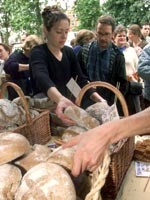
FEW nations have seen such enormous changes in their farming industry as the United Kingdom. Recent decades have not only brought farmers more than their fair share of drought and flood but also powerful new pressures on their livelihoods that their grandfathers, 50 years ago, could never have imagined.
These pressures are generated by the modern world’s economic, environmental and consumer forces that have changed the face of the entire agriculture and food-production industry in the UK.
As a result, the UK’s agricultural and food production and processing technologies have become some of the most advanced and most sought-after in the world. The downside for many farmers is the personal consequences of the inevitable contraction of an industry that once employed millions but now supports a full-time workforce of fewer than 400,000 people.
Today in England, farmers tend an impressive 80% of the country’s 130,000 square kilometres of land and yet the direct economic value of farming in the food they produce is less than 1% of the nation’s gross domestic product.
This tiny proportion hides the real and immeasurable economic value of farming in terms of the raw materials that feed the UK’s major food processing industry, the new generations of energy crops for cleaner fuels, and the enormous benefit for the UK public in the shape of attractive landscapes that provide a fertile field for the growth industry of rural tourism – a sector that today is worth more in economic terms than farming.
Increasingly, these developments are being encouraged not only by government policies in the UK but also by the farming community. Modern farms are getting bigger but profits are dropping and farm incomes are at the lowest levels since the 1930s, while more than 40,000 jobs have been lost in farming in the past two years alone.
Many UK farmers are weathering the storm by becoming more productive. In the past 18 months the total area under crops has increased by 3% to nearly four million hectares, with wheat up by 20% at nearly 1.9 million hectares. At 21 million tonnes, the UK’s wheat and barley harvest marked a 17% increase over 2001.
Cheap grain from the Ukraine has contributed to a drop in grain prices for UK farmers but the UK’s National Farmers’ Union sees a confident future.
The overall wheat market looks promising for UK suppliers, reports a National Farmers’ Union spokesman. World production levels have fallen, especially in the United States, Canada and Australia, while new markets are opening up in north Africa and Asia.
Livestock, overshadowed today by UK’s grain and horticultural sectors, saw reductions of between 2- and 5% in dairy and beef breeding herds. Horticulture, by contrast, is a vibrant and growing feature of UK agriculture, with the UK leading the way internationally in research, development and environmental stewardship. Horticulture output today is worth almost two billion pounds sterling, more than 10% of the total industry.
Farming in UK also contributes strongly to a thriving export business in foodstuffs that rose to more than 4.8 billion pounds in the first six months of 2002 alone.
Defra - the government’s Department for the Environment, Food and Rural Affairs - is striving to help UK farmers survive and prosper, balancing the priorities of ensuring competitively priced food for UK and overseas markets with the need for high standards of safety, environmental care, animal welfare and a sustainable, efficient food chain – while maintaining the essential character of rural communities. Government forecasts point to a 9% growth in farming income this year.
Farmers are also contributing more effectively to government environmental schemes. Direct state ownership of production farms has long since ended but more than 25,000 farmers are now involved in government initiatives and in recent years 400 flourishing farmers’ markets have opened to offer producers scope to sell direct to their customers. Nearly 80,000 farmers and growers are members of farm assurance schemes.
The UK’s leisure and tourist industry, too, is presenting new opportunities for farmers. In the past 20 years an estimated 15,000 farmers have introduced products or services for the leisure market, from big pleasure and educational parks to small-scale facilities for holidaymakers.
Meanwhile the system of state support to food producers is under review with farmers, consumers and the government increasingly anxious to ensure Europe’s Common Agricultural Policy (CAP) develops as an integrated rural development policy.
Reforms to the policy get the support of UK farmers, although the industry is concerned that changes to the proposed phasing-in of farm support to new member states could affect farmers.
Farmers do not see any major competitive threat arising from the introduction of new member states into the European Union (EU), says the National Farmers’ Union. We broadly agree with the proposed EU position on agriculture in the enlargement talks.
Meanwhile another initiative for UK farmers to grasp is new scope for growing green fuels. Research shows almost one fifth of arable land could be devoted to crops for conversion into bio-fuels.
This promises to be one of the most dramatic shifts in the function of farming in recent history, says the National Farmers’ Union. It will provide new opportunities for farmers and will be excellent news for the environment. With such initiatives, UK agriculture is preparing to look ahead to a cleaner, productive and more stable future.
These pressures are generated by the modern world’s economic, environmental and consumer forces that have changed the face of the entire agriculture and food-production industry in the UK.
As a result, the UK’s agricultural and food production and processing technologies have become some of the most advanced and most sought-after in the world. The downside for many farmers is the personal consequences of the inevitable contraction of an industry that once employed millions but now supports a full-time workforce of fewer than 400,000 people.
Today in England, farmers tend an impressive 80% of the country’s 130,000 square kilometres of land and yet the direct economic value of farming in the food they produce is less than 1% of the nation’s gross domestic product.
This tiny proportion hides the real and immeasurable economic value of farming in terms of the raw materials that feed the UK’s major food processing industry, the new generations of energy crops for cleaner fuels, and the enormous benefit for the UK public in the shape of attractive landscapes that provide a fertile field for the growth industry of rural tourism – a sector that today is worth more in economic terms than farming.
Increasingly, these developments are being encouraged not only by government policies in the UK but also by the farming community. Modern farms are getting bigger but profits are dropping and farm incomes are at the lowest levels since the 1930s, while more than 40,000 jobs have been lost in farming in the past two years alone.
Many UK farmers are weathering the storm by becoming more productive. In the past 18 months the total area under crops has increased by 3% to nearly four million hectares, with wheat up by 20% at nearly 1.9 million hectares. At 21 million tonnes, the UK’s wheat and barley harvest marked a 17% increase over 2001.
Cheap grain from the Ukraine has contributed to a drop in grain prices for UK farmers but the UK’s National Farmers’ Union sees a confident future.
The overall wheat market looks promising for UK suppliers, reports a National Farmers’ Union spokesman. World production levels have fallen, especially in the United States, Canada and Australia, while new markets are opening up in north Africa and Asia.
Livestock, overshadowed today by UK’s grain and horticultural sectors, saw reductions of between 2- and 5% in dairy and beef breeding herds. Horticulture, by contrast, is a vibrant and growing feature of UK agriculture, with the UK leading the way internationally in research, development and environmental stewardship. Horticulture output today is worth almost two billion pounds sterling, more than 10% of the total industry.
Farming in UK also contributes strongly to a thriving export business in foodstuffs that rose to more than 4.8 billion pounds in the first six months of 2002 alone.
Defra - the government’s Department for the Environment, Food and Rural Affairs - is striving to help UK farmers survive and prosper, balancing the priorities of ensuring competitively priced food for UK and overseas markets with the need for high standards of safety, environmental care, animal welfare and a sustainable, efficient food chain – while maintaining the essential character of rural communities. Government forecasts point to a 9% growth in farming income this year.
Farmers are also contributing more effectively to government environmental schemes. Direct state ownership of production farms has long since ended but more than 25,000 farmers are now involved in government initiatives and in recent years 400 flourishing farmers’ markets have opened to offer producers scope to sell direct to their customers. Nearly 80,000 farmers and growers are members of farm assurance schemes.
The UK’s leisure and tourist industry, too, is presenting new opportunities for farmers. In the past 20 years an estimated 15,000 farmers have introduced products or services for the leisure market, from big pleasure and educational parks to small-scale facilities for holidaymakers.
Meanwhile the system of state support to food producers is under review with farmers, consumers and the government increasingly anxious to ensure Europe’s Common Agricultural Policy (CAP) develops as an integrated rural development policy.
Reforms to the policy get the support of UK farmers, although the industry is concerned that changes to the proposed phasing-in of farm support to new member states could affect farmers.
Farmers do not see any major competitive threat arising from the introduction of new member states into the European Union (EU), says the National Farmers’ Union. We broadly agree with the proposed EU position on agriculture in the enlargement talks.
Meanwhile another initiative for UK farmers to grasp is new scope for growing green fuels. Research shows almost one fifth of arable land could be devoted to crops for conversion into bio-fuels.
This promises to be one of the most dramatic shifts in the function of farming in recent history, says the National Farmers’ Union. It will provide new opportunities for farmers and will be excellent news for the environment. With such initiatives, UK agriculture is preparing to look ahead to a cleaner, productive and more stable future.
Source : http://www.agriworld.nl/
Wheat: Planning for better yield (بہتر پیداوار کے لئے منصوبہ بندی: گندم)

The wheat is sown the world over on an area touching 220 million hectares producing 600 million tons with an average of 2700 kg. of grain per hectare.
The Main land China brings 30 million hectares the largest are in the world followed by Russian Federation, India, USA, Australia, Canada, Turkey and Pakistan.
As far as the highest yield is concerned, France produces 7200 kg per hectare. Who leads other countries because it has much longer growing season of winter wheat? It is rather more appropriate to compare our wheat grain yields with countries of similar climatic and eco-zones, like Mexico and Egypt. Their yields are much higher owing both genetic constitution of cultivars and environment provided to them to express their biological potential.
Since Mexico and Pakistan are located in analogous ecological zones therefore, introduction of Mexican varieties in the country in sixties verities in the country in sixties ushered an era of green revolution. But unfortunately the pace of development could not be maintained for long and we now lag much behind the Mexican yields, who have gone for ahead of us producing 3900 Kg. of wheat grain per hectare as compared to 2491 K. for us in the year 1999, the best season. According to FAO statistics for 1995, among spring wheat growing countries Egypt has fantastic yield by producing 5422 kg. of grain per hectare where as Indian Punjab producing 4090 kg. and even India leads us in average yield by producing 2559 kg. notwithstanding three times largest area as compared to ours.
In our country wheat is cultivated largely (80 per cent), in irrigated areas whereas, rest in rain-fed. The yield and production in latter part of the country is predominantly controlled by rains during growing season, which usually are erratic. Hence yields are much lower during season of low precipitation.
There are of course three kinds of wheat cultivars, the long duration, the medium and short duration varieties. The wheat yields usually start declining after 20th Nov sowing at the rate of 20 kg per day.
Hence efforts must be made to plant it at optimum time. In cotton areas the sticks are by and large used as fuel in domestic house hold. Big heaps of cotton sticks can be seen along the roadside and in villages.
There is a great need to educate growers as to how much yield is last due to burning of sticks. So as to restores the soil fertility at least 80 per cent sticks may be buried in soil. In order to enhance the decomposition half a bag of urea per acre may be incorporated in the soil after the stick burial.
In view of numerous benefits through the addition of organic matter from cotton sticks, may be made mandatory for each farmer. In case wheat sowing is delayed owing to late maturity of cotton, wheat may be sown in standing crop, if there is low or no incidence of weeds. However in rice tract wheat should be sown on proper time immediately after crop harvest. In rice zone a sizable area must be brought under this season legumes, the chickpeas and lentils. It is of course not so difficult to reap their yields up to 1000 kg per acre, which will bring more finances to the growers as compared to raising wheat.
Adequate quantity of nitrogen, phosphorus and potash may be applied to harvest maximum grain. If phosphorus is added adequately it will not only help to realize good harvest, the following crop of cotton shall utilize the remaining residual phosphorus, without adding more of this element to cotton.
In my opinion there are three main factors, which largely contribute towards low wheat yields, the optimum time of sowing, prevalence of high intensity of weeds, imbalance use of fertilizer. The low level of organic matter is also important for holding the yield. In irrigated areas the crop is generally sown either after the harvest of cotton or paddy.
In most of the cases it is customary that farmers neither add organic matter nor farmyard manure to maintain fertility, thus resulting in low yields. In order to sow wheat at optimum time the cotton breeders in collaboration with cotton agronomists must try to reduce the life span of cotton crop without hampering the yield and deteriorating the quality of lint. In this way not only have substantial saving on the management of cotton but also timely sowing of wheat to realize maximum yields. As far as weeds are concerned it is estimated that decline in wheat yield ranges from 15 to 40 per cent or even more in some cases, which is indeed a great loss towards food self-sufficiency.
As my experience goes tit is much worst in certain localities where it appears as if wheat is an unwarted and obnoxious plant. It is in fact a glaring negligence on the part of extension workers and the grower himself.
The extension workers with the help of farmers may try to delineate the areas of high infestation of "Dumbi Sitti" and wild oats.
The farmers in such areas may be advised to control them through agronomic practices or herbicide treatment or removing the weed plants just after earring because at that stage it is easy to differentiate between both the weed and wheat plants.
If these weeds are not controlled now they will spread like a wild fire in coming years in whole of wheat areas. Thee weeds have capability to produce large quantities of seed, which is always shed before wheat harvest. Henceforth infestation increases at an alarming pace. These two weeds along with "It Sit" can be used as biological warfare in agriculture. On the other hand in barani areas "Pohalli" is quite a common weed, which can be easily seen while travelling by air, road or rail after the harvest of wheat.
The abundance of this weed undoubtedly is a main factor for low yield in the area. The Pohalli remain green much after harvest of crop. At that time it is an appropriate time to launch a campaign to eradicate it by uprooting and burning. Two or three exercise will help to whip out the weed in barani areas. Henceforth this year may be declared a Pohalli eradication year. The road sides and sides of rail tracks may also be cleared of it.
The pace of yield increase per hectare during past twenty years has been awfully poor rather frustrating since 1980 to 01. The population growth however, over whelmed the increase in yield per unit area therefore; the enlarged demand of wheat consumption was met by bringing more area under crop.
Which certainly is not a good omen. But for how long increase in area under crop shall come to our rescue. This problem has to be tackled through serious and wise planning and execution.
First of all we shall have to get rid of non-technocrats from lowest level to highest in the ministry of food, agriculture and livestock and induct able selfless agricultural scientists but not the pseudo ones. More funds have to be infused for research and transfer of technology. At the same time we must motivate the general public to diversify the so-called dietary pattern, is greatly imbalanced, which required to be substituted by balanced through intake of nutritive food, so as to reduce unnecessary burden on wheat. Besides this we must substantially boost yield per unit area. Thus placing this area under oil seeds, vegetables, fruits, pulses, and flowers. Also considerable area may be brought under fodder to raise ore animals for milk and meat production. Last but not the least we ought to arrest population growth.
With the improvement in agronomic practices we must try to equate with Egyptian or across the Punjab wheat yields in less than three or at the most five years.
Storage facilities: There are many stored grain pests, which destroy a considerable quantity of produce while in store in villages. Efforts may be made to eliminate the losses. If these losses are controlled it is possible that we may not have to import food grains any longer.
Courtesy Daily Dawn, 10 December 2001
The Main land China brings 30 million hectares the largest are in the world followed by Russian Federation, India, USA, Australia, Canada, Turkey and Pakistan.
As far as the highest yield is concerned, France produces 7200 kg per hectare. Who leads other countries because it has much longer growing season of winter wheat? It is rather more appropriate to compare our wheat grain yields with countries of similar climatic and eco-zones, like Mexico and Egypt. Their yields are much higher owing both genetic constitution of cultivars and environment provided to them to express their biological potential.
Since Mexico and Pakistan are located in analogous ecological zones therefore, introduction of Mexican varieties in the country in sixties verities in the country in sixties ushered an era of green revolution. But unfortunately the pace of development could not be maintained for long and we now lag much behind the Mexican yields, who have gone for ahead of us producing 3900 Kg. of wheat grain per hectare as compared to 2491 K. for us in the year 1999, the best season. According to FAO statistics for 1995, among spring wheat growing countries Egypt has fantastic yield by producing 5422 kg. of grain per hectare where as Indian Punjab producing 4090 kg. and even India leads us in average yield by producing 2559 kg. notwithstanding three times largest area as compared to ours.
In our country wheat is cultivated largely (80 per cent), in irrigated areas whereas, rest in rain-fed. The yield and production in latter part of the country is predominantly controlled by rains during growing season, which usually are erratic. Hence yields are much lower during season of low precipitation.
There are of course three kinds of wheat cultivars, the long duration, the medium and short duration varieties. The wheat yields usually start declining after 20th Nov sowing at the rate of 20 kg per day.
Hence efforts must be made to plant it at optimum time. In cotton areas the sticks are by and large used as fuel in domestic house hold. Big heaps of cotton sticks can be seen along the roadside and in villages.
There is a great need to educate growers as to how much yield is last due to burning of sticks. So as to restores the soil fertility at least 80 per cent sticks may be buried in soil. In order to enhance the decomposition half a bag of urea per acre may be incorporated in the soil after the stick burial.
In view of numerous benefits through the addition of organic matter from cotton sticks, may be made mandatory for each farmer. In case wheat sowing is delayed owing to late maturity of cotton, wheat may be sown in standing crop, if there is low or no incidence of weeds. However in rice tract wheat should be sown on proper time immediately after crop harvest. In rice zone a sizable area must be brought under this season legumes, the chickpeas and lentils. It is of course not so difficult to reap their yields up to 1000 kg per acre, which will bring more finances to the growers as compared to raising wheat.
Adequate quantity of nitrogen, phosphorus and potash may be applied to harvest maximum grain. If phosphorus is added adequately it will not only help to realize good harvest, the following crop of cotton shall utilize the remaining residual phosphorus, without adding more of this element to cotton.
In my opinion there are three main factors, which largely contribute towards low wheat yields, the optimum time of sowing, prevalence of high intensity of weeds, imbalance use of fertilizer. The low level of organic matter is also important for holding the yield. In irrigated areas the crop is generally sown either after the harvest of cotton or paddy.
In most of the cases it is customary that farmers neither add organic matter nor farmyard manure to maintain fertility, thus resulting in low yields. In order to sow wheat at optimum time the cotton breeders in collaboration with cotton agronomists must try to reduce the life span of cotton crop without hampering the yield and deteriorating the quality of lint. In this way not only have substantial saving on the management of cotton but also timely sowing of wheat to realize maximum yields. As far as weeds are concerned it is estimated that decline in wheat yield ranges from 15 to 40 per cent or even more in some cases, which is indeed a great loss towards food self-sufficiency.
As my experience goes tit is much worst in certain localities where it appears as if wheat is an unwarted and obnoxious plant. It is in fact a glaring negligence on the part of extension workers and the grower himself.
The extension workers with the help of farmers may try to delineate the areas of high infestation of "Dumbi Sitti" and wild oats.
The farmers in such areas may be advised to control them through agronomic practices or herbicide treatment or removing the weed plants just after earring because at that stage it is easy to differentiate between both the weed and wheat plants.
If these weeds are not controlled now they will spread like a wild fire in coming years in whole of wheat areas. Thee weeds have capability to produce large quantities of seed, which is always shed before wheat harvest. Henceforth infestation increases at an alarming pace. These two weeds along with "It Sit" can be used as biological warfare in agriculture. On the other hand in barani areas "Pohalli" is quite a common weed, which can be easily seen while travelling by air, road or rail after the harvest of wheat.
The abundance of this weed undoubtedly is a main factor for low yield in the area. The Pohalli remain green much after harvest of crop. At that time it is an appropriate time to launch a campaign to eradicate it by uprooting and burning. Two or three exercise will help to whip out the weed in barani areas. Henceforth this year may be declared a Pohalli eradication year. The road sides and sides of rail tracks may also be cleared of it.
The pace of yield increase per hectare during past twenty years has been awfully poor rather frustrating since 1980 to 01. The population growth however, over whelmed the increase in yield per unit area therefore; the enlarged demand of wheat consumption was met by bringing more area under crop.
Which certainly is not a good omen. But for how long increase in area under crop shall come to our rescue. This problem has to be tackled through serious and wise planning and execution.
First of all we shall have to get rid of non-technocrats from lowest level to highest in the ministry of food, agriculture and livestock and induct able selfless agricultural scientists but not the pseudo ones. More funds have to be infused for research and transfer of technology. At the same time we must motivate the general public to diversify the so-called dietary pattern, is greatly imbalanced, which required to be substituted by balanced through intake of nutritive food, so as to reduce unnecessary burden on wheat. Besides this we must substantially boost yield per unit area. Thus placing this area under oil seeds, vegetables, fruits, pulses, and flowers. Also considerable area may be brought under fodder to raise ore animals for milk and meat production. Last but not the least we ought to arrest population growth.
With the improvement in agronomic practices we must try to equate with Egyptian or across the Punjab wheat yields in less than three or at the most five years.
Storage facilities: There are many stored grain pests, which destroy a considerable quantity of produce while in store in villages. Efforts may be made to eliminate the losses. If these losses are controlled it is possible that we may not have to import food grains any longer.
Courtesy Daily Dawn, 10 December 2001
New Agri-Technology

A new method of rice farming
New Delhi: In Kerala, where paddy cultivation is going out of favour because of labour problems and high costs, the novel System of Rice Intensification’ (SRI) has shown the potential to rehabilitate this crop.
This innovative technique ensures substantially higher productivity and lower input use. The SRI system has, in fact, proved its utility in many other regions as well, spanning Sikkim in the north-east to Tamil Nadu in the south.
The environment-friendly SRI method of growing rice involves transplanting relatively young paddy seedlings (eight to 10 days old instead of usual 20 days or more), along with the soil that contains their roots. The spacing between plants and rows is kept relatively wide at around 25 cms to provide room for the robust growth of both root and plant.
Plant nutrients are supplied largely through farm-yard manure, supplemented with need-based fertiliser applications. The most significant aspect of SRI is that the fields are not kept submerged under water all the time, as is usual in rice farming, but are allowed to remain just wet without flooding.
The success of SRI technology in most places where it has been tried in the past few years has led to its promotion in a big way by Krishi Vigyan Kendras (KVKs or agricultural science centres) and other farm research bodies under the Indian Council of Agricultural Research (ICAR). What makes the SRI method an instant hit with paddy growers is the saving of almost all key inputs (water, seed, fertilisers, pesticides and labour), and a perceptible spurt in crop productivity, which has, of late, tended to stagnate at many places.
The saving on water, which is rapidly turning scarce in most paddy-growing tracts, can be 30 to 40 per cent or more; that of costly seeds over 50 per cent. The reduction in the requirement of other inputs varies according to field conditions.
Higher crop yields in SRI fields are attributed to several factors. Since the seedlings are planted along with the soil in which these are growing, it helps the undisturbed roots to develop more profusely and enables it to tap more nutrients from the soil. This, in turn, facilitates a larger number of tillers (shoots) per root-system, vigorous plant growth and, more importantly, longer panicles (ear-heads) to accommodate more grain per plant.
Moreover, the fact that the seedlings are planted in wide-apart rows makes it easier for farmer to remove weed and other rogue plants that normally compete with the main crop for extracting nutrition from soil.
SRI fields also have a lower incidence of pests and diseases, mainly on account of lower humidity because the fields are not kept inundated. Overall crop yields have been found to surge by anywhere between 20 and 100 per cent over those obtained with normal cultivation practices.
The introduction of the SRI technique in different states has shown that it works well with both high-yielding varieties and local varieties of paddy. In east Sikkim, for instance, where farmers tend to grow only traditional varieties, such as Attey, Krishnabhog and Dudhetulsi, the new method enabled farmers to bag, on average, over 23 quintals of grain per hectare, against 19.6 quintals with conventional method, in kharif 2009-10. Farmers earned an average net return of around Rs 25,550 per hectare, more than double the production cost of Rs 10,950, according to sources in the KVK run by the ICAR Research Complex for the north-eastern hilly region, located in East Sikkim district.
In the Nellanad area of Thiruvananthapuram, where the SRI technology has been introduced by the local KVK in collaboration with the Coimbatore-based Tamil Nadu Agricultural University, farmers have reportedly reaped a paddy harvest of nearly 7 tonnes per hectare, against the state’s average crop productivity of 3 to 3.5 tonnes a hectare. This has spurred the state government to include the promotion of SRI in its overall agricultural development policy. Kerala’s example can surely be emulated elsewhere.
Similar encouraging results have been reported from Tamil Nadu’s key paddy belt in the Mettur dam command area where the uncertainty over the release of canal water from this dam has been posing problems for paddy growers. With the SRI technique, farmers can manage comfortably with whatever water is available.
Courtesy: Business Standard
New Delhi: In Kerala, where paddy cultivation is going out of favour because of labour problems and high costs, the novel System of Rice Intensification’ (SRI) has shown the potential to rehabilitate this crop.
This innovative technique ensures substantially higher productivity and lower input use. The SRI system has, in fact, proved its utility in many other regions as well, spanning Sikkim in the north-east to Tamil Nadu in the south.
The environment-friendly SRI method of growing rice involves transplanting relatively young paddy seedlings (eight to 10 days old instead of usual 20 days or more), along with the soil that contains their roots. The spacing between plants and rows is kept relatively wide at around 25 cms to provide room for the robust growth of both root and plant.
Plant nutrients are supplied largely through farm-yard manure, supplemented with need-based fertiliser applications. The most significant aspect of SRI is that the fields are not kept submerged under water all the time, as is usual in rice farming, but are allowed to remain just wet without flooding.
The success of SRI technology in most places where it has been tried in the past few years has led to its promotion in a big way by Krishi Vigyan Kendras (KVKs or agricultural science centres) and other farm research bodies under the Indian Council of Agricultural Research (ICAR). What makes the SRI method an instant hit with paddy growers is the saving of almost all key inputs (water, seed, fertilisers, pesticides and labour), and a perceptible spurt in crop productivity, which has, of late, tended to stagnate at many places.
The saving on water, which is rapidly turning scarce in most paddy-growing tracts, can be 30 to 40 per cent or more; that of costly seeds over 50 per cent. The reduction in the requirement of other inputs varies according to field conditions.
Higher crop yields in SRI fields are attributed to several factors. Since the seedlings are planted along with the soil in which these are growing, it helps the undisturbed roots to develop more profusely and enables it to tap more nutrients from the soil. This, in turn, facilitates a larger number of tillers (shoots) per root-system, vigorous plant growth and, more importantly, longer panicles (ear-heads) to accommodate more grain per plant.
Moreover, the fact that the seedlings are planted in wide-apart rows makes it easier for farmer to remove weed and other rogue plants that normally compete with the main crop for extracting nutrition from soil.
SRI fields also have a lower incidence of pests and diseases, mainly on account of lower humidity because the fields are not kept inundated. Overall crop yields have been found to surge by anywhere between 20 and 100 per cent over those obtained with normal cultivation practices.
The introduction of the SRI technique in different states has shown that it works well with both high-yielding varieties and local varieties of paddy. In east Sikkim, for instance, where farmers tend to grow only traditional varieties, such as Attey, Krishnabhog and Dudhetulsi, the new method enabled farmers to bag, on average, over 23 quintals of grain per hectare, against 19.6 quintals with conventional method, in kharif 2009-10. Farmers earned an average net return of around Rs 25,550 per hectare, more than double the production cost of Rs 10,950, according to sources in the KVK run by the ICAR Research Complex for the north-eastern hilly region, located in East Sikkim district.
In the Nellanad area of Thiruvananthapuram, where the SRI technology has been introduced by the local KVK in collaboration with the Coimbatore-based Tamil Nadu Agricultural University, farmers have reportedly reaped a paddy harvest of nearly 7 tonnes per hectare, against the state’s average crop productivity of 3 to 3.5 tonnes a hectare. This has spurred the state government to include the promotion of SRI in its overall agricultural development policy. Kerala’s example can surely be emulated elsewhere.
Similar encouraging results have been reported from Tamil Nadu’s key paddy belt in the Mettur dam command area where the uncertainty over the release of canal water from this dam has been posing problems for paddy growers. With the SRI technique, farmers can manage comfortably with whatever water is available.
Courtesy: Business Standard
Sheep Shearing Tips

When you're trying to get through shearing a few hundred wool sheep or more, being ready for the day will help everyone stay on task.
- Bring the flock in the day before shearing
Having the flock under cover will keep them dry. Wet wool does not shear or store well. Most shearers will decline shearing your sheep if the fleece it too wet. - Prevent the flock from feeding and watering the night before
The shearer needs to handle the animal and hold it in a secure position when clipping the fleece. This is far more comfortable for the ewe if she doesn't have a belly full of feed. Since the rumen can hold quite a bit of food it also makes the shearers job easier if the animal is empty. - Set up in advance
If your system is a portable one, set up the pens and race ahead of time. If it is a permanent set up make sure any repairs are done and the system is operational. The shearing crew are busy people and having to wait for set up only delays them for the next farm down the line. - Sort your animals prior to shearing
Keep animals of different wool types separate. This will aid you when it comes to the wool grading process. - Have extra help on hand
This sheep shearing tip can really make the difference on shearing day. Hire extra hands if needed.
It can be a long day trying to keep up to a crew of shearers without having the assistance you need. You also hold the shearers back when you don't have enough help to keep up to them. As a rule of thumb have one person per shearer plus two to three extra for other jobs like moving sheep and packing wool. - Consider doing other flock treatments at the same time
You'll have the flock in anyway and if you can manage with an spare person to take on the extra duty, shearing day can also double as opportunity to do an annual flock treatment like vaccination. - Have a head gate at the end of the race
Catch the first ewe to come down the race in the head gate and leave her there. She'll stand comfortably and will draw the remaining animals up the race. This is one of the simplest sheep shearing tips to put into practice yet it can make a world of difference to how the day progresses.
- Prepare meals ahead of time
One of the highlights of shearing day is that it involves a meal with friends. It's often customary to feed the shearing crew and the extra help who have graciously assisted.
We often plan meals that can be put on to cook while we work. We've also utilized the cooking talents of family members and have had them attend to the cooking for us.
If the day is long every ones spirits will be kept up with breaks for coffee and snack refreshments for energy. Our shearing crew enjoy healthy snacks that won't make them tired such as fruit and granola bars. - Be flexibleSometime the shearers can't get to you on the scheduled day. Delays at previous stops can add up in a hurry. Don't be angry if the shearer phones to say he can't make it. Consider that he's also trying to keep a feasible schedule and route and is relying on a whole lot of other people being ready. A good shearer will be sure to come back and fit you in.
The New breed: Pakistan olive plantation intiatives

With high global demand and rising prices in the international market and Pakistan’s annual edible oil import bill exceeding $2bn, the rationale of recent olive cultivation initiatives in the country cannot be overemphasized.
Olive demand globally is on the rise. Germans are using five times more and British ten times more olive than they did in 1990. In America, olive demand is growing by 6% annually for two decades now. Olive prices in world market have doubled to $3,400 a ton recently.
Pakistan has over 0.8mn hectares of wasteland suitable for olive cultivation. An official of the now defunct Pakistan Oil Seeds Development Board (PODB) had told this writer that by covering the area with olive plants, Pakistan can produce around 1.84mn tons of olive oil. This would fetch over $6bn at the current rate of olive in world market.
Olive is used in foods, pickles, medicines, food preservation, textile industry and cosmetic preparation etc. Special restaurants dealing in olive foods have also been opened in various cities of the country.
The Pakistan agricultural research council (PARC) has begun implementing the project “Promotion of olive cultivation for economic development and poverty alleviation” whereby olive plants will be cultivated on 300 hectares in Baluchistan, 100 hectares in KP, 300 hectares in federally administered tribal areas and 100 hectares in the Pothohar region of Punjab.
The Rs382mn project to be completed in three years is being under the Pakistan Italian debt-for-development swap agreement.
The Punjab government has declared the Pothowar region as Olive Valley. It recently distributed thousands of olive plants amongst olive growers and trained them.
The Punjab Agriculture and Meat Company also plans to develop 10 certified nurseries. These nurseries –being opened through private sector in Attock, Rawalpindi, Chakwal, Jehlum and Khushab districts –would have a catchment area of 27000 acres and would have an impact of $78mn.
The potential area suitable for olive cultivation is around 8mn acres in Punjab of which 0.4mn is being targeted though this initiative. Total impact of this land, if covered, would be $1.16bn.
Similarly, in KP’s budget for 2012-13, a Rs100mn project –research and development on European olive and maintenance of model olive farm Sangbhatti Mardan –has been started and allocated Rs15mn this year.
As the PODB stands dissolved, Sangbhatti olive farm, one of its assets, has been handed over to the directorate of agriculture research in KP.
“The department will provide olive plantlets, grafts and buds produced in the Sangbhatti farm to farmers. Though the production of olive nursery is limited at present, it is nevertheless sufficient for the time being,” said an official of KP agriculture ministry wishing anonymity.
“Despite our efforts, mass resort to olive plantation is however unlikely in the immediate future,” the official added.
Pakistan has been unable to increase its olive acreage and yield for indifference by successive governments, lack of private sector’s interest, focus on other cash crops, security situation in KP and tribal belt, too few olive nurseries and marketing worries. It only has 1130 acres of land under productive olive trees and the crop is yet to be inserted into the cropping system.
The question arises: will the new initiatives succeed?
While olive farmers usually grow olive haphazardly, the problem is multiplied by non-availability of standard olive plants and restricted mobility of local and foreign experts in the olive-rich but militancy-hit tribal belt, KP and Baluchistan. This explains why there has been of late a shift of focus to other parts of the country.
Olive acreage and yield could be increased by providing quality seed, polythene rolls for wrapping round the buds/grafts to save them from cold and moisture, modern training and marketing support to olive farmers. Have similar interventions been planned?
Pakistan has over 0.8mn hectares suitable area for olive but as most farmers on fertile lands prefer other crops, the potential area may be around 0.264mh. Even if a third of this area is brought under olive cultivation, around 25mn olive seedlings would be needed (@250 trees per hectare) over the next few years. Has this been considered?
Pakistan need to shift to tissue culture technology, standardise its nursery production and open more germplasm units to provide enough olive seeds, buds and grafts.
Olive tree usually bears fruit after 4-5 years. However, Sultan Ali Khan, a farmer from Swat, said his community had grafted around 40000 wild olive trees but only 5000 of them have been successful and have started bearing fruit after 7-8 years.
Shafeeq Ahmad from Swari Buner said an olive plant could bear over 40-45kg of fruit if sufficient care, protection, pesticides and fertilisers are provided to the plants.
“We planted 600 olive plants on a mountain ridge around ten years ago but it is yet to bear plentiful fruit. Bearing of fruit was late and paltry because the orchards could not be looked after well nor were provided sufficient and timely doses of fertiliser and pesticides as the farmers were not given guidance and help,” he told the TNS.
Another problem is that very ambitious projects are launched but are later forgotten. For example, there is no mention of the projects of establishment of olive orchards in KP and that of research, development and promotion of olive in KP which were allocated funds in the last two budgets but not in this fiscal and have been left out incomplete.
A report on the Malakand olive development prepared by ISCOS, an international organisation, had urged induction of more olive technicians, modern training for them and increase in their salaries, introduction of a system of reward for successful olive farmers, subsidized provision of olive plants, sensitizing farmers against cutting and grazing of animals in olive orchards and an in-depth dialogue and interaction between all the stakeholders in the olive production chain.
The PODB had converted quite a few wild olive plants into fruit bearing trees. That process needs to be continued.
The planners also need to ensure olive production is developed on commercial lines and its enterprises facilitated.
Where and how to plant?
Olives are grown by the methods of budding and grafting of wild olive trees or planting of new trees. However farmers have found the method of grafting the most successful. A research showed that around 80-90% olive trees grown through T-Grafting technique from August to September were successful.
The areas with an altitude between 400 and 1,700 meters, slope of 20°, rainfall between 250 mm and 1,000 mm and having a warm, semi arid, winter rain climate are mostly suitable for olive plants.
Olive production varies on the basis of temperature and rainfall. Rain falls abundantly in March (olive flowering season) and in summer in Pakistan. This rain pattern could pose threats for the olive cultivation –the first may heavily reduce the production and the second –rainfall in summer –could make it prone to various plant diseases. It requires extra care and more use of pesticides.
Olive trees can endure low temperature of even -9° C but these can hardly tolerate it at vegetative stage. It however needs a bit low temperatures in winter to be able to produce good amount of inflorescences and flowers in spring.
Olives require well drained soils for adequate growth. Heavily clayish or sandy soils or one prone to water logging should be avoided.
The common diseases in olive plants are trunk decay, sooty mould and peacock spot, which decay and dry up the tree.
The olive trees need more nitrogenous fertilizer than phosphorous and potash. The latter two fertilizers should be mixed in the soil before planting of trees at the rate of 200 kg and 300 kg per hectare respectively. Best time of nitrogen fertilizer is pre-flowering and stone-hardening stage.


